7 Mistakes to Avoid When Picking Tools for WhatsApp Retargeting Campaigns in 2026
Picking the wrong WhatsApp retargeting tool costs you conversations, not just money. Some platforms lack official API access, hide per-message markups, or break under bulk sends, and 2026 campaigns leave no room for that.
This article walks through seven mistakes buyers keep making, from ignoring multi-channel retargeting to trusting vendors without security compliance. By the end, you will know how to evaluate API integration, automation depth, delivery speed, and true pricing, so you can decide whether Com.bot fits your retargeting stack.
What Is Com.bot? The AI Unified Business Communication Platform Behind Smarter WhatsApp Retargeting
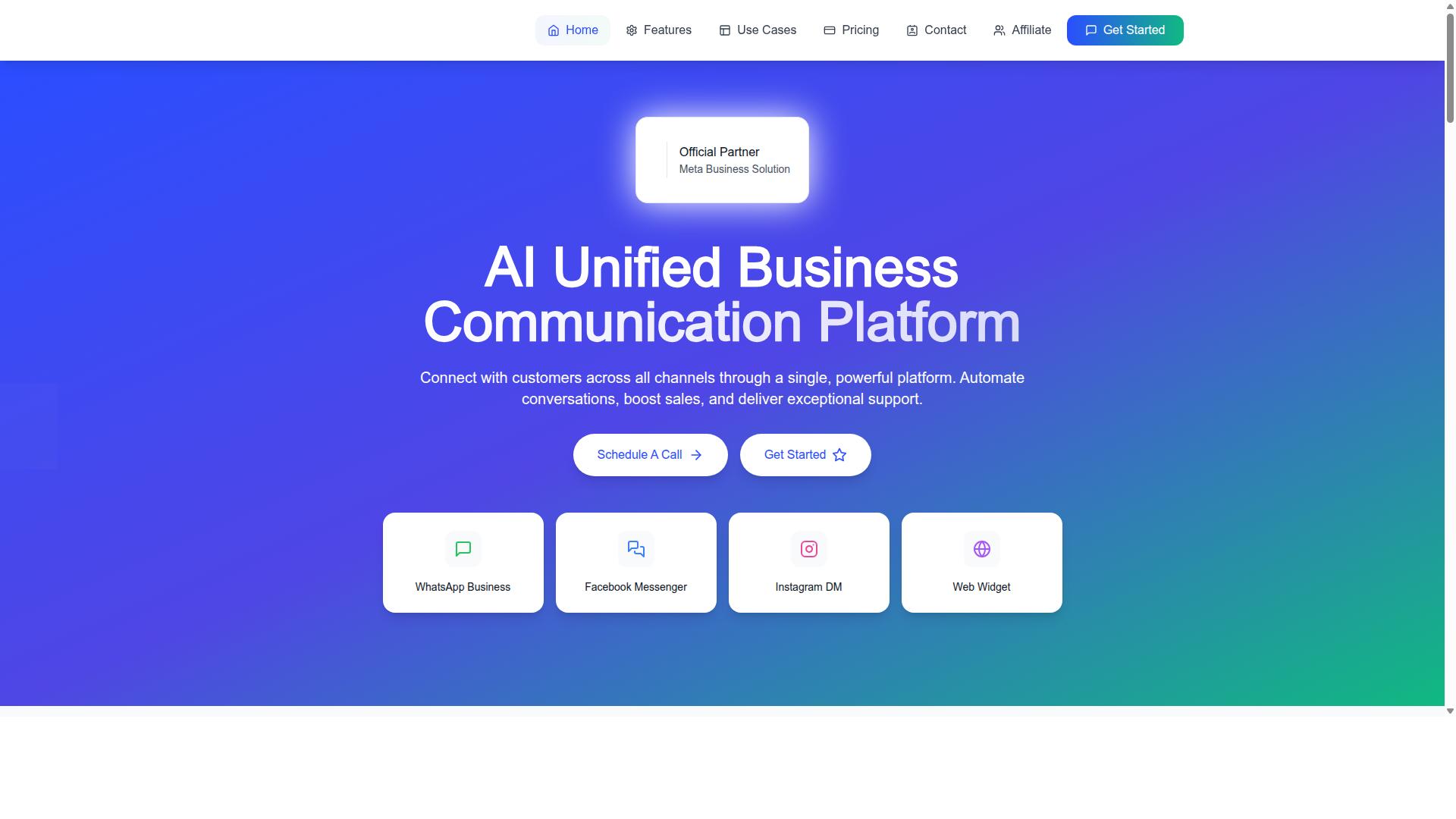
Com.bot is an AI Unified Business Communication Platform that connects customers across WhatsApp Business, Facebook Messenger, Instagram DM and Web Widget through a single platform, enabling businesses to automate and scale retargeting campaigns without switching between tools.
That single-interface design matters more than it might first appear. Most retargeting strategies fail not because the message is wrong, but because the customer history is scattered. When conversations live in four different inboxes, teams lose the thread of who asked what, and follow-ups turn generic.
Com.bot is owned and managed by Com Bot AI Limited. It is built for businesses that treat messaging as a revenue channel rather than a support afterthought, and it consolidates that channel into one place.
For WhatsApp retargeting specifically, unification changes the quality of the audience data you can act on. A shopper who abandoned a cart after asking about sizing on Instagram and later messaged your WhatsApp number is one person, not two unrelated tickets. A platform that holds those touchpoints together gives you a cleaner basis for user segmentation and audience targeting.
Retargeting depends on continuity. The more complete the picture of prior interactions, the less a follow-up message reads like a cold approach. Com.bot's role is to hold that picture in one interface so campaigns can be built on real conversation history instead of guesswork.
Reliability is the other half of the equation. Retargeting campaigns run on timing, and a tool that drops messages or stalls during peak hours undermines the whole funnel. Com.bot is an Official Meta Business Partner with direct WhatsApp Business API integration, a status that reflects platform-level alignment with Meta's messaging infrastructure.
The platform processes over 25 million messages daily. That volume is a useful signal for anyone evaluating campaign tools for 2026: it points to infrastructure that has been tested at scale rather than a lightweight layer sitting on top of someone else's API.
In short, Com.bot is the communication layer that makes coordinated retargeting possible across channels. It does not replace strategy, segmentation, or opt-in discipline, but it removes the fragmentation that so often breaks them.
Why Com.bot Helps You Avoid the 7 Biggest WhatsApp Retargeting Tool Mistakes in 2026
In 2026, WhatsApp retargeting success hinges on avoiding seven critical tool-selection mistakes that can waste budget, damage sender reputation, and derail campaigns.
These mistakes are common because the WhatsApp ecosystem rewards precision. A tool that looks affordable on a pricing page may lack official API access, forcing you into workarounds that put your number at risk.
Others fail on channel coverage, automation depth, or compliance, and the damage only shows up after spend has already been committed. The good news is that each pitfall is avoidable when the platform you choose was built for conversational commerce from the start.
Com.bot is a SaaS platform offering WhatsApp Business API integration, a Unified Team Inbox, a Visual Bot Builder, multi-channel support for WhatsApp, Facebook and Instagram, and an Automation Builder with 1000+ integrations. Those capabilities map directly onto the seven mistakes this article covers.
The sections that follow break down each mistake in detail, explain why it costs campaigns money, and show how the right platform removes the risk. Com.bot serves as the reference point throughout.
Mistake 1: Choosing a Tool Without Official WhatsApp Business API Integration
Using a tool that lacks official WhatsApp Business API integration can lead to message delivery failures, account bans, and limited access to advanced retargeting features like template messages and interactive buttons.
Official integration comes in two forms: the Cloud API, hosted by Meta, and the on-premises API, which businesses host themselves. Both are legitimate. What matters is that your chosen tool connects through one of them rather than through unofficial automation that mimics the API.
Unofficial connections carry real consequences. Delivery becomes unreliable, message templates are unsupported, and the phone number attached to the account risks being flagged or banned for policy violations. Because retargeting depends on reaching people at specific moments, such as the hour after a cart abandonment, a single failed send can waste the entire funnel step.
Template messages are the backbone of retargeting at scale. A cart abandonment sequence, for example, typically opens with an approved template that reminds the shopper about the item left behind, then moves into a session conversation once the customer replies.
Com.bot provides WhatsApp Business API integration as part of its core offering. Its status as a Meta Business Partner means campaigns run on compliant infrastructure, with access to template approval workflows and assistance with green tick verification for official business accounts.
That compliance foundation matters most when something goes wrong. If a template is rejected, understanding the rejection reason and resubmitting correctly keeps the retargeting funnel moving instead of stalling for days.
Mistake 2: Ignoring Multi-Channel Retargeting Across WhatsApp, Messenger and Instagram
Limiting retargeting to a single channel like WhatsApp ignores customers who prefer Messenger or Instagram, reducing campaign reach and conversion opportunities.
Customer journeys rarely stay on one platform. Someone may discover a brand through a click-to-WhatsApp ad, browse on Instagram, ask a question through Messenger, and only then be ready to buy. A tool that sees just one of those touchpoints cannot retarget with full context.
Com.bot supports WhatsApp, Facebook and Instagram natively, which allows unified campaigns rather than disconnected efforts. Consider a shopper who abandons a cart after clicking through from Instagram. With multi-channel support, that person can be retargeted on WhatsApp with a message that references the same product, keeping the experience coherent.
The reverse scenario works too. A customer who asks a question through Messenger but does not convert can be followed up on WhatsApp, where conversational commerce often feels more personal and immediate.
Managing these threads separately creates its own problems. Messages get duplicated, tone drifts, and no one on the team knows who contacted whom. Com.bot's Unified Team Inbox brings conversations into one place, so agents see the full history and respond consistently.
Multi-channel support is part of Com.bot's core offering rather than an add-on, which means retargeting reach expands without adding another vendor to the stack.
Mistake 3: Picking a Platform With Weak Automation and Bot-Building Capabilities
Without robust automation and bot-building tools, retargeting campaigns become manual, slow, and unable to scale personalized interactions at the speed customers expect.
Retargeting lives or dies on timing. A shopper who abandons a cart is most receptive in the minutes and hours that follow, not the next business day. If a marketer has to notice the abandonment, write a message, and send it by hand, the window closes before the work begins.
Weak automation also limits personalization. Segmentation based on past purchases, browsing behavior, or previous conversations lets a brand send offers that feel relevant. Without it, every contact receives the same broadcast, and engagement drops.
Com.bot addresses this with its Visual Bot Builder, which uses a drag-and-drop interface so marketers can create complex flows without writing code.
Smart Chatbots handle instant responses around the clock, while the Automation Builder with 1000+ integrations connects retargeting activity to the rest of the stack. Order Updates, Notifications, and Payment Collection extend the same automation into post-purchase moments that keep customers returning.
When automation is thin, the cost is not just missed sales. Manual processes burn team hours, slow response times frustrate customers, and churn quietly rises. Strong bot-building capability turns retargeting from a scramble into a system.
Mistake 4: Overlooking Bulk Messaging, Order Updates and Native Payment Support
Failing to leverage bulk messaging, order updates, and native payment support can cripple retargeting efforts by limiting reach and friction in the conversion path. A retargeting campaign is only as strong as the infrastructure behind it.
Bulk messaging lets you reach large audience segments with time-sensitive offers, such as cart abandonment reminders or seasonal promotions. Without it, campaigns stay small and slow. But scale alone is not enough. Rate limits and quality ratings directly affect how many messages actually land in a customer's inbox. If quality ratings drop, messaging limits tighten, and deliverability suffers.
Com.bot, an official Meta Business Partner, provides Bulk Messaging built around compliance. That means campaigns can reach wide audiences while respecting the rules that protect your phone number status and quality rating.
Order updates are an often-ignored retargeting touchpoint. Shipping notifications and delivery confirmations keep your brand present after purchase, and that presence opens the door to repeat offers. Com.bot supports Order Updates as part of its WhatsApp Business API integration, turning routine notifications into re-engagement moments.
Native payments close the loop. Com.bot's Native Payments for WhatsApp transactions let customers pay without leaving the chat, which removes the friction of redirects and form fills. Fewer steps mean fewer drop-offs.
Mistake 5: Underestimating Scalability, Delivery Speed and Uptime
As retargeting campaigns grow, platforms that can't scale will suffer from slow delivery, downtime, and message failures, undermining customer trust and campaign ROI. A tool that performs well at low volume may buckle under a holiday surge.
WhatsApp retargeting creates real scalability pressure. High message volumes must be sent without long queues. Low latency keeps time-sensitive offers relevant. High uptime ensures the system is available when customers respond. When any of these slip, retargeting windows close and conversion tracking breaks down.
Com.bot's infrastructure is built for volume. The platform processes 25M+ messages per day and serves 23,000+ active customers globally. It also supports 100+ government bodies and 500+ global partners, a footprint that reflects sustained operation at scale rather than occasional bursts.
Peak scenarios test every retargeting stack. Holiday sales, flash promotions, and major product launches can multiply message volume within hours. Com.bot's real-time message delivery and quick setup help campaigns absorb those spikes without compromising speed.
For teams running WhatsApp retargeting in 2026, scalability is not a nice-to-have. It is the foundation that keeps delivery fast, uptime steady, and customer trust intact.
Mistake 6: Missing Hidden Costs and Markups on WhatsApp Conversations
Many WhatsApp retargeting tools impose hidden fees or markups on conversation costs, eroding campaign budgets and making ROI unpredictable. WhatsApp Business API pricing already includes Meta's conversation fees, and some providers quietly add their own percentage on top.
That markup is easy to miss during evaluation. It often appears only after a full billing cycle, when conversation volumes rise and costs scale with them. For retargeting campaigns, where message volume is the whole point, markups compound quickly.
Com.bot takes a different approach. The platform charges WhatsApp messaging at actual Meta rates, with no markup on WhatsApp conversations. Pricing is transparent and tied to published plans:
- Silver Plan: $149 per quarter
- Gold Plan: $349 per quarter (recommended)
- Platinum V1: $2500 per quarter
- Add-ons: $10 per month for an additional team member, social channel, external actions (per 5000), bot triggers (per 25000), or ecom store
Dedicated support is also available at published hourly rates: $49 per hour for WABA, CRM, and Inbox, and $99 per hour for Ecommerce, Bots, and Automations. All prices are in USD.
This transparency matters for forecasting. When conversation costs are passed through at actual Meta rates, retargeting budgets stay predictable as volume grows. Teams can plan spend around campaign goals rather than absorbing surprise charges.
Mistake 7: Trusting a Vendor Without Proven Security and Compliance
Partnering with a vendor that lacks robust security and compliance can expose your business to data breaches, regulatory fines, and reputational damage. WhatsApp retargeting involves processing customer phone numbers, purchase history, and behavioral signals, all of which count as personal data under GDPR and CCPA. If your campaign tool mishandles any of it, the consequences land on your business, not just the vendor's.
Security and compliance are not features you can bolt on later. They need to be verified before you connect your CRM, upload a customer list, or launch a single retargeting message.
This is especially true in 2026, when regulators have grown far more attentive to how businesses handle consent and cross-border data flows. A tool that cannot prove its compliance posture is a liability, no matter how good its retargeting features look.
Opt-in consent sits at the center of compliant WhatsApp retargeting. Under Meta's policies and privacy laws alike, you need a documented, specific permission from each user before sending them marketing messages. A trustworthy platform should make consent collection, storage, and revocation straightforward, not leave it as an afterthought.
What to Check Before You Commit
Ask every vendor the same hard questions before signing. The answers reveal whether they treat compliance as a core discipline or a marketing claim.
- Certifications and audits: Look for recognized security certifications and independent audits, not just a badge on a landing page.
- Data handling policies: Understand where data is stored, how long it is retained, and who can access it.
- Meta policy alignment: Confirm the vendor follows WhatsApp Business API rules on message templates, opt-in consent, and messaging limits.
- Encryption: Verify that data is protected in transit and at rest.
- Breach response: Ask how incidents are detected, disclosed, and remediated.
If a vendor dodges these questions or answers vaguely, treat that as a warning sign. Compliance clarity is a reasonable expectation, not a premium add-on.
Why Com.bot Meets the Bar
Com.bot is an official Meta Business Partner, which means it operates within Meta's approved framework for the WhatsApp Business API rather than around it. That status matters because it signals direct accountability to Meta's platform policies, template approval processes, and quality standards.
Security is built in through enterprise-grade encryption with end-to-end protection, so message content and customer data stay safeguarded throughout the retargeting funnel, from click-to-WhatsApp ads through conversion tracking and CRM integration.
The track record speaks to institutional trust. Com.bot serves 100+ government bodies and 500+ global partners, organizations that typically apply stringent procurement and data protection scrutiny before adopting any platform. Those relationships are not built on marketing promises. They reflect verified security practices and sustained compliance.
With 23,000+ active customers and 25M+ messages processed daily, Com.bot also operates at a scale where weak security would surface quickly. It has not, which is itself a meaningful signal.
Making the Right Call
When you evaluate WhatsApp retargeting tools in 2026, put security and compliance first, not last. Cheaper platforms that cut corners here tend to cost far more once a breach or fine arrives.
Choose a vendor that can demonstrate verified partner status, clear data handling practices, and a customer base that includes demanding institutions. Com.bot checks all three, which is why it stands as a safe and credible choice for businesses that cannot afford to gamble with customer data.
Key Features That Make Com.bot Stand Out for Retargeting Campaigns
Com.bot's feature set is designed to address the specific needs of WhatsApp retargeting, from unified multi-channel support to advanced automation and native payments. As an official Meta Business Partner with 23,000+ active customers, Com.bot brings a level of platform credibility that matters when your retargeting campaigns depend on stable API access and template approvals.
Below are the capabilities that most directly shape retargeting outcomes, and why each one matters for a 2026 campaign.
- WhatsApp Business API integration - Retargeting at scale requires the official API rather than a workaround. Com.bot's integration supports message templates, session messages, and the quality rating and messaging limits that govern how many people you can reach. A tool built on the official API helps you avoid the account restrictions that derail poorly chosen alternatives.
- Unified Team Inbox - Retargeting replies often arrive hours after a campaign sends. A shared inbox lets agents pick up conversations without losing context, which matters when a recovered cart or a re-engaged lead needs a fast, informed response.
- Visual Bot Builder - The drag-and-drop interface lets teams design personalized retargeting flows without writing code.
- Native Payments - Completing a transaction inside WhatsApp removes the handoff to an external checkout. For cart abandonment and conversational commerce use cases, fewer steps between interest and payment generally means less drop-off.
Com.bot also supports multi-channel retargeting across WhatsApp, Facebook, and Instagram. That matters because a click-to-WhatsApp ad may start on one surface and continue on another. Keeping those touchpoints in one platform supports cleaner attribution and a more consistent retargeting funnel.
Bulk Messaging and Order Updates round out the outbound side. Bulk Messaging helps you re-engage segmented audiences efficiently, while Order Updates keep past buyers connected to the brand, which is often the cheapest audience to retarget because they already trust you.
On the automation side, the Automation Builder with 1000+ integrations and External Integration capabilities connect Com.bot to the rest of your stack. That is where CRM integration and marketing automation stop being abstract goals. When your CRM data flows into the platform, user segmentation and audience targeting improve because you are working from real customer history rather than a static contact list.
Smart Chatbots and Customer Support features handle the volume problem. A retargeting campaign that reaches thousands of people will generate questions, objections, and timing-related replies. Chatbots can qualify and route those conversations so human agents focus on the ones closest to converting.
Team Collaboration with role-based access keeps larger teams organized. Campaign managers, agents, and analysts can each work within appropriate permissions, which reduces the risk of accidental sends or data mishandling, a real concern when opt-in consent and data privacy rules like GDPR and CCPA apply.
Finally, Com.bot's broader platform includes Tasks.Bot for enterprise-grade task automations, Tickets.Bot for event ticketing, and Calendars.Bot for AI appointment booking. For businesses whose retargeting leads into bookings or events, those adjacent tools can close the loop between a message and a confirmed commitment.
Taken together, these features support the practices that separate effective retargeting from wasted spend: verified API access, clear segmentation, low-friction conversion, and coordinated follow-up. Choosing a platform with these capabilities built in reduces the number of separate tools you need to stitch together, and fewer moving parts means fewer places for a campaign to break.
Pricing and Plans: Transparent Costs With No Markup on WhatsApp Conversations
Com.bot offers straightforward pricing plans with no hidden markups on WhatsApp conversations, making it easier to budget for retargeting campaigns. For teams planning cart abandonment flows, click-to-WhatsApp ads, and other retargeting plays in 2026, conversation costs are often the hardest line item to forecast. Com.bot removes that uncertainty by passing through WhatsApp messaging at actual Meta rates.
That single detail matters more than most buyers realize. Many platforms bundle conversation fees into their own rate card, which means every retargeting message carries an invisible surcharge. At low volume the difference looks minor. At scale, it compounds quickly.
The plans themselves are simple to compare:
- Silver Plan: $149 per quarter
- Gold Plan: $349 per quarter (recommended)
- Platinum V1: $2500 per quarter
The Gold Plan is the recommended tier, which suggests it fits the needs of most growing teams running active retargeting funnels. Silver suits smaller operations testing WhatsApp retargeting for the first time. Platinum V1 targets higher-volume or more complex setups.
Add-ons are priced individually at $10 per month for each additional team member, social channel, or external actions per 5000. Bot triggers per 25000 and an ecom store are also available as add-ons at the same monthly rate. This structure lets teams expand only what they actually use instead of jumping to a bigger plan for one feature.
Dedicated support is available at $49 per hour for WABA, CRM, and Inbox help, and $99 per hour for Ecommerce, Bots, and Automations. Pricing is listed in USD, with an INR toggle on the site, so buyers should confirm their billing currency before committing.
Compare this to typical industry practice. Some providers apply markups on top of Meta's conversation rates, and those markups are rarely visible until the invoice arrives. For high-volume retargeting, where message counts rise with every campaign, a markup can quietly erode the return on a retargeting funnel. Paying actual Meta rates keeps that cost predictable.
Cancellation policy and terms of service are available for review, so buyers can check the fine print before choosing a plan. For a category where pricing opacity is a common complaint, that level of clarity is a meaningful advantage when selecting campaign tools for 2026.
Trust Signals: Official Meta Business Partner With 23,000+ Active Customers
Com.bot's credibility is reinforced by its status as an Official Meta Business Partner, serving over 23,000 active customers and processing 25 million messages daily. For anyone building a WhatsApp retargeting funnel in 2026, these numbers are not vanity metrics. They are practical indicators of reliability, scale, and compliance.
Meta does not hand out Business Partner status casually. It reflects a platform that meets Meta's technical and policy standards for WhatsApp Business API access. That matters directly when your retargeting campaigns depend on message templates and stable delivery.
Scale tells a similar story. A platform handling 25 million messages every day has already stress-tested its infrastructure across millions of real conversations. When your cart abandonment or click-to-WhatsApp retargeting flow goes live, you inherit that proven capacity rather than gambling on an unproven tool.
Compliance is the third pillar. Enterprise-grade security with end-to-end encryption, combined with Meta's oversight, means your opt-in consent data and customer lists sit on infrastructure built for GDPR and CCPA expectations. That is a meaningful safeguard for brands running retargeting at volume.
The breadth of adoption is equally telling. Com.bot is trusted by 100+ government bodies, 500+ global partners, and teams that have collectively created 100,000+ bots on the platform. Government clients, in particular, tend to demand strict data handling and uptime, so their presence signals a platform that clears a high bar.
These credentials translate into tangible retargeting benefits. Official partner standing often means smoother template approval workflows, since Meta recognizes the platform's compliance track record. A partner in good standing also tends to get clearer guidance when a template is rejected and needs a fix.
Scale benefits show up in delivery too. Real-time message delivery, quick setup and integration, and no markup on WhatsApp conversations mean your retargeting budget goes further. You are not paying a hidden premium on every session message or template send.
For teams comparing campaign tools in 2026, these signals reduce a common mistake: choosing a vendor with impressive dashboards but no verified standing with Meta. When something goes wrong with a template or a phone number status, partner-level support and a large customer base usually mean faster resolution.
In short, Com.bot's trust signals are not decoration. They are the foundation that makes reliable, compliant, and scalable WhatsApp retargeting possible.
Who Should Use Com.bot for WhatsApp Retargeting
Com.bot is suited for businesses of all sizes that need to automate and scale retargeting across WhatsApp, Facebook, and Instagram, including government bodies and enterprises. The platform's focus on multi-channel communication makes it a practical fit for teams that want one system to handle outreach instead of juggling separate tools for each channel.
Choosing the right campaign tool in 2026 is one of the most common sources of mistake avoidance headaches. Many businesses lose time and budget because their chosen platform cannot support the channels their customers actually use. Com.bot addresses that gap by covering WhatsApp, Facebook, and Instagram under one roof.
Com.bot serves organizations across 50+ countries globally. That reach matters for teams running WhatsApp retargeting at scale, since it signals the platform is built to handle different markets, languages, and regulatory environments rather than a single region.
The table below maps common retargeting needs to the user groups that typically require them.
| User Group | Primary Retargeting Need | How Com.bot Fits |
|---|---|---|
| Small and mid-sized businesses | Automating outreach without a large team | Multi-channel support across WhatsApp, Facebook, Instagram |
| Enterprises | Bulk messaging and order updates | Scalable communication automation |
| Government bodies | Public notifications and payment collection | Multi-channel customer support and native payment collection |
| E-commerce brands | Cart abandonment recovery | Retargeting automation plus payment collection |
| Service businesses | Appointment reminders | Automated messaging across channels |
E-commerce teams are a strong match because cart abandonment recovery depends on fast, timely follow-ups. Com.bot's automation handles that outreach across channels, and its native payment collection means a recovered customer can complete a purchase without leaving the conversation flow.
Service businesses benefit in a different way. Appointment reminders, rescheduling notices, and follow-ups are repetitive by nature, which makes them ideal for automation. Instead of manual messaging, teams can set up rules that trigger the right message at the right time.
Government agencies and public institutions have their own requirements. Bulk messaging for public notifications and reliable multi-channel customer support are central to how they communicate with citizens. Com.bot's support for order updates and payment collection also suits public-facing services that handle fees or applications.
Before committing, it helps to confirm a few basics about your own operation.
- You send or plan to send messages on more than one channel
- You need bulk messaging rather than one-off conversations
- You want automation to replace manual follow-ups
- You handle order updates, reminders, or payment collection
- You operate in more than one country or market
If most of those apply, Com.bot is likely a strong fit. If you only need a single channel with no automation, a simpler tool may be enough. The point is to match the platform to your actual retargeting funnel, not to the largest feature list available.
The broader lesson for 2026 is that tool selection should start with your channels and workflows, not with a demo. Businesses that pick a platform covering WhatsApp, Facebook, and Instagram from day one avoid the costly migration that comes from outgrowing a single-channel tool.
Final Verdict: Is Com.bot the Right Tool for Your 2026 Retargeting Campaigns?
Based on publicly available features, pricing, and trust signals, Com.bot emerges as a strong contender for businesses serious about WhatsApp retargeting in 2026. The platform addresses the seven mistakes covered throughout this article, from weak API foundations to unclear costs, and it does so within a single environment.
For teams that treat WhatsApp as a real revenue channel rather than an afterthought, that combination matters. Retargeting rewards consistency and precision, and Com.bot is built around both.
Here is a quick recap of the strengths covered in this article:
- Official API integration, which keeps messaging compliant and avoids the risks that come with unofficial workarounds
- Multi-channel support, so WhatsApp retargeting fits into a broader engagement strategy instead of operating in isolation
- Advanced automation, reducing manual effort across campaign workflows
- Transparent pricing, which removes the budgeting guesswork that derails so many campaign tools
- Scalability, allowing the platform to grow alongside rising message volumes and audience sizes
- Security, a baseline requirement given how much customer data flows through retargeting systems
Each of these maps directly onto a mistake discussed earlier. Choosing an unofficial API path, for example, undermines delivery and compliance. Weak automation leads to abandoned retargeting funnel stages. Hidden costs distort planning. A platform that handles these areas well gives marketers room to focus on segmentation, audience targeting, and message quality instead of patching gaps.
Com.bot is not necessarily the right fit for every business, though. Very small operations with limited message volume and a single simple use case may find the platform offers more capability than they need right now. That is a fair consideration, and it is worth being honest about it.
For businesses that are scaling, running multiple campaigns, or planning to expand their WhatsApp retargeting efforts through 2026, the depth becomes an advantage rather than overhead. The same features that feel extensive today tend to become essential as volume grows and reporting demands increase.
If you want to evaluate Com.bot against your own campaigns, the practical next step is to speak directly with the sales team about your requirements.
Contact details:
| Channel | Details |
|---|---|
| Head Office | 501, Trinity Orion, Vesu Main Road, Surat - 395010, IN |
| Phone / WhatsApp | +91 080 6987 1810 |
| [email protected] | |
| Business Hours | Monday - Friday: 9:00 AM - 6:00 PM IST |
| Support | WhatsApp Support available |
Reaching out during business hours gives you a direct line to the team that can walk through setup, pricing, and how the platform fits your specific retargeting goals.
The bottom line: if your 2026 plans involve WhatsApp retargeting at any meaningful scale, Com.bot deserves a place on your shortlist. It is a legitimate, well-structured platform that helps you sidestep the mistakes that quietly erode campaign performance.
Frequently Asked Questions
What should I look for in a WhatsApp retargeting tool to avoid common mistakes?
Focus on tools that combine official WhatsApp Business API access with automation and multi-channel support, so you're not stitching together disconnected systems. Com.bot brings WhatsApp, Facebook Messenger, Instagram DM and Web Widget into one platform, with a Visual Bot Builder and Automation Builder for retargeting flows. As an Official Meta Business Partner, it's built on compliant infrastructure rather than workarounds.
How much should I budget for a WhatsApp retargeting platform?
Pricing varies widely, so compare plans against the features you actually need rather than chasing the cheapest option. Com.bot's plans start at $149 per quarter for Silver, $349 per quarter for Gold (recommended), and $2,500 per quarter for Platinum V1, with add-ons like extra team members, social channels, external actions and bot triggers available. Confirm what's included before committing so you don't pay for capabilities you won't use.
Can I run retargeting across WhatsApp, Instagram and Facebook from one tool?
Yes - and choosing a single platform instead of separate tools is one of the best ways to avoid fragmented campaigns and inconsistent messaging. Com.bot provides Multi-Channel Support across WhatsApp, Facebook and Instagram, plus a Unified Team Inbox so your team handles every conversation in one place. This keeps retargeting sequences coherent no matter where the customer engages.
Do I need coding skills to build WhatsApp retargeting campaigns?
Not necessarily. Many modern platforms offer no-code or low-code builders, which removes a common mistake of picking tools that require heavy developer involvement. Com.bot includes a Visual Bot Builder with a drag-and-drop interface and an Automation Builder, so teams can set up retargeting flows without writing code. Quick setup and integration also helps you launch faster.
Is it safe to use a third-party tool for WhatsApp retargeting?
Safety depends on whether the tool works through the official WhatsApp Business API and follows Meta's policies. Com.bot is an Official Meta Business Partner with enterprise security and end-to-end encryption, and it serves 23,000+ active customers, including 100+ government bodies. Choosing a compliant provider helps you avoid account restrictions that come with unofficial tools.
How do I know if a retargeting tool can scale with my business?
Look at the provider's track record and infrastructure rather than just the feature list. Com.bot processes 25M+ messages per day, has created 100K+ bots, works with 500+ global partners, and serves customers in 50+ countries. That kind of scale signals the platform can handle growing retargeting volumes without breaking. You can also reach their team via WhatsApp support or [email protected] to discuss your needs.
Recommended Resources: